
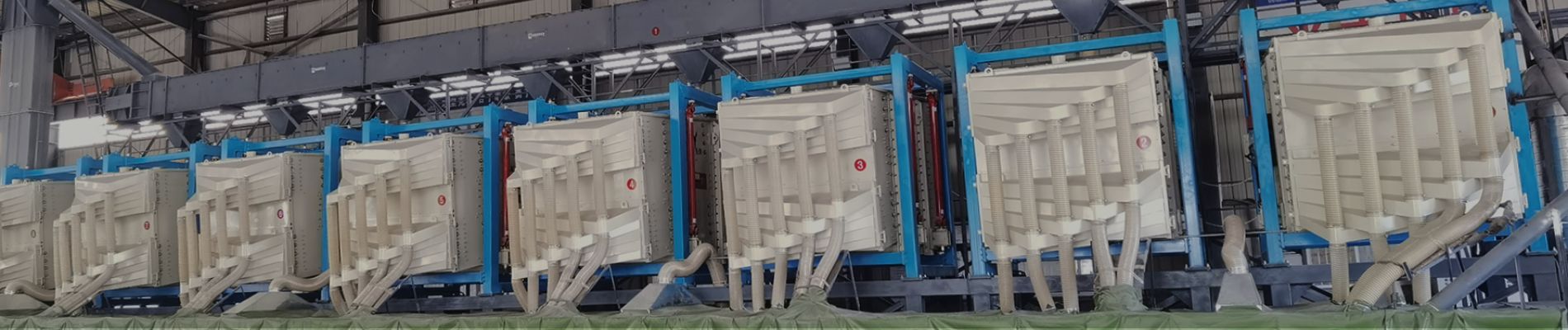
What Is a Circular Vibrating Screen?
A circular vibrating screen is a type of screening machine that uses circular motion to separate bulk materials by particle size. It is widely used in industries such as mining, aggregate processing, coal preparation, and construction materials, where large volumes of material need to be classified efficiently and continuously.
Unlike linear vibrating screens, which move materials in a straight-line motion, a circular vibrating screen generates a circular or near-circular vibration trajectory. This motion causes materials on the screen surface to continuously stratify, loosen, and move forward, allowing smaller particles to pass through the screen openings while larger particles remain on the surface and are discharged separately.
Circular vibrating screens are valued for their simple structure, high screening efficiency, strong adaptability to different materials, and reliable operation under heavy-duty conditions. As a result, they are one of the most commonly used screening machines in primary and secondary material processing systems.
How Does a Circular Vibrating Screen Work?
A circular vibrating screen works by generating controlled circular vibrations that move materials across an inclined screen surface, enabling effective separation based on particle size. The screening process relies on a combination of mechanical vibration, gravity, and material stratification.
Circular Motion and Vibration Mechanism
The circular motion of the screen is produced by a vibration exciter, typically consisting of an eccentric shaft or unbalanced weights driven by an electric motor. When the exciter rotates, it creates centrifugal force, causing the screen box to vibrate in a circular trajectory.
This circular vibration is transmitted evenly across the entire screen surface, ensuring stable operation and consistent material movement. Compared with linear motion, circular motion is particularly suitable for handling medium to coarse-grained materials and for applications requiring high throughput and durability.
Material Stratification and Screening Process
Once material is fed onto the inclined screen surface, vibration causes the material bed to loosen and stratify. During this process:
-
Larger and heavier particles rise to the top of the material layer
-
Smaller and finer particles move downward toward the screen surface
-
Particles smaller than the screen aperture pass through the mesh
-
Oversized material continues moving forward and exits the screen discharge end
This continuous stratification and separation process is the key reason circular vibrating screens can achieve high screening efficiency, even when handling large material volumes.
Key Factors Affecting Screening Efficiency
Several operating parameters directly influence the performance of a circular vibrating screen:
-
Vibration amplitude: Determines the throwing force of the material and affects penetration through the screen openings
-
Vibration frequency: Controls how often particles are lifted and repositioned on the screen surface
-
Screen inclination angle: Influences material travel speed and retention time
-
Screen mesh size and type: Defines the final particle size separation
By properly matching these factors to the characteristics of the processed material, a circular vibrating screen can maintain stable performance, reduce clogging, and deliver consistent classification results.
Main Components of a Circular Vibrating Screen
A circular vibrating screen is composed of several key components that work together to ensure stable vibration, efficient screening, and long service life. Understanding these components helps operators optimize performance and plan maintenance more effectively.
Screen Box
The screen box is the main structural body of the circular vibrating screen. It supports the screen mesh and carries the material load during operation. The screen box is typically fabricated from high-strength steel plates or profiles and designed to withstand continuous vibration and heavy material impact.
To improve durability, critical areas of the screen box are often reinforced, especially in heavy-duty mining and aggregate applications.
Vibration Exciter
The vibration exciter is the core component responsible for generating circular motion. It usually consists of an eccentric shaft, bearings, and unbalanced weights. When driven by the motor, the rotating exciter produces centrifugal force, causing the screen box to vibrate in a circular or near-circular trajectory.
The design and adjustment of the vibration exciter directly affect vibration amplitude and screening efficiency, making it one of the most important components of the machine.
Screen Mesh
The screen mesh determines the final particle size separation. Depending on the application, different mesh materials and structures can be used, such as woven wire mesh, polyurethane panels, or rubber screen plates.
Proper selection of screen mesh improves screening accuracy, reduces clogging, and extends service life, especially when processing abrasive or wet materials.
Motor and Drive System
The motor and drive system provide power to the vibration exciter. Most circular vibrating screens use an electric motor connected via coupling or belt drive. The motor is usually mounted on the side of the screen box or on a separate base to ensure stable operation.
Reliable power transmission ensures consistent vibration frequency and reduces energy loss during operation.
Spring or Damping System
The spring or damping system supports the screen box and isolates vibration from the supporting structure or foundation. Common types include coil springs, rubber springs, or composite damping elements.
This system helps absorb vibration energy, reduce noise, and protect surrounding equipment, contributing to safer and more stable operation.
Types of Circular Vibrating Screens
Circular vibrating screens are available in different configurations to meet various processing requirements. The main differences are based on the number of screen decks, structural design, and application intensity.
Single Deck Circular Vibrating Screen
A single deck circular vibrating screen has one screening surface and is mainly used for simple separation tasks where only one particle size cut is required. It is commonly applied in pre-screening or scalping operations to remove oversized material before further processing.
Single deck screens feature a simple structure, easy maintenance, and lower operating cost.
Multi-Deck Circular Vibrating Screen
Multi-deck circular vibrating screens are equipped with two or more screening surfaces stacked vertically. Each deck separates material into different size fractions, allowing multiple classifications in a single screening process.
These screens are widely used in mining, aggregate, and construction material plants where precise grading and high production capacity are required.
Heavy-Duty Circular Vibrating Screen
Heavy-duty circular vibrating screens are designed for harsh operating conditions and large material loads. They feature reinforced screen boxes, larger vibration exciters, and wear-resistant components.
This type is commonly used in primary screening stages for mining, quarrying, and coal processing, where durability and high throughput are critical.
Light-Duty Circular Vibrating Screen
Light-duty circular vibrating screens are used for applications involving smaller capacities or less abrasive materials. They are often found in industries such as sand processing, recycling, or light industrial screening.
Compared with heavy-duty models, light-duty screens emphasize energy efficiency, compact structure, and ease of installation.
Applications of Circular Vibrating Screens
Circular vibrating screens are widely used across industries that require efficient classification, separation, and sizing of bulk materials. Their stable circular motion, high processing capacity, and adaptability make them suitable for both primary and secondary screening operations.
Mining and Mineral Processing
In mining and mineral processing plants, circular vibrating screens are commonly used to classify ores and minerals based on particle size before crushing, after crushing, or prior to beneficiation processes. They are suitable for screening materials such as iron ore, copper ore, limestone, and other metallic or non-metallic minerals.
Their robust structure and ability to handle large feed sizes make circular vibrating screens especially effective in heavy-duty mining environments.
Aggregate and Quarrying
Circular vibrating screens play a critical role in aggregate production and quarrying operations. They are used to separate crushed stone, gravel, and sand into different size fractions for use in concrete, asphalt, and road construction.
The circular motion helps maintain consistent material flow and reduces the risk of screen blockage, even when processing materials with varying moisture content.
Coal and Power Generation
In coal preparation plants and power generation facilities, circular vibrating screens are used for sizing and grading raw coal, clean coal, and by-products. Accurate screening improves downstream combustion efficiency and reduces equipment wear.
Their high throughput capability makes them suitable for continuous operation in large-scale coal handling systems.
Sand, Gravel, and Construction Materials
Circular vibrating screens are widely applied in sand and gravel processing lines, as well as in the production of construction materials. They help achieve uniform particle size distribution, which is essential for meeting construction and engineering standards.
Depending on the application, both single deck and multi-deck configurations can be used to meet different grading requirements.
Recycling and Industrial Processing
In recycling and light industrial applications, circular vibrating screens are used to separate recyclable materials, industrial by-products, and bulk solids. Light-duty circular screens are often selected for these applications due to their compact size and energy efficiency.
Circular Vibrating Screen vs Other Screening Equipment
Understanding the differences between a circular vibrating screen and other types of screening equipment helps users select the most suitable solution for their specific application.
Circular Vibrating Screen vs Linear Vibrating Screen
The main difference between circular and linear vibrating screens lies in their vibration trajectory and material movement.
A circular vibrating screen generates circular motion, which allows materials to move in a continuous rolling and throwing action. This motion is particularly effective for screening medium to coarse materials and handling large material volumes.
In contrast, a linear vibrating screen uses linear motion, where materials move in a straight line across the screen surface. Linear screens are often preferred for fine material screening, precise sizing, or applications requiring strict material flow control.
In general, circular vibrating screens are favored for heavy-duty and high-capacity applications, while linear vibrating screens are more suitable for fine screening and lightweight materials.
Circular Vibrating Screen vs Vibrating Sieve
A vibrating sieve is typically used for fine screening and classification of powders or granular materials, often in industries such as food processing, pharmaceuticals, and chemicals.
Compared with vibrating sieves, circular vibrating screens are designed for industrial-scale operations involving larger feed sizes and higher throughput. They feature stronger structures, larger screen areas, and higher vibration intensity, making them better suited for mining, aggregate, and bulk material processing.
Summary of Key Differences
| Equipment Type | Motion Type | Typical Capacity | Suitable Materials | Common Applications |
|---|---|---|---|---|
| Circular Vibrating Screen | Circular motion | High | Medium to coarse bulk materials | Mining, aggregates, coal |
| Linear Vibrating Screen | Linear motion | Medium | Fine to medium materials | Precise grading, dewatering |
| Vibrating Sieve | Circular or rotary | Low to medium | Fine powders, granules | Food, chemical, pharmaceutical |
Key Technical Parameters of a Circular Vibrating Screen
The technical parameters of a circular vibrating screen define its screening capacity, efficiency, and suitability for specific applications. Selecting the right parameters is essential to achieve stable operation and optimal material separation.
The most important technical parameters include:
| Parameter | Description |
|---|---|
| Screen Size | The effective screening area, usually defined by screen length and width |
| Number of Decks | Determines how many particle size fractions can be separated |
| Capacity | The volume or mass of material processed per hour |
| Vibration Frequency | The number of vibration cycles per minute |
| Amplitude | The vibration displacement affecting material throwing force |
| Inclination Angle | Influences material travel speed and retention time |
| Mesh Size | Defines the final particle size of screened materials |
By matching these parameters with material characteristics and production requirements, a circular vibrating screen can deliver consistent performance while minimizing energy consumption and wear.
How to Choose the Right Circular Vibrating Screen
Choosing the right circular vibrating screen requires careful consideration of both material properties and operating conditions. An appropriate selection improves screening efficiency, reduces downtime, and extends equipment service life.
Material Characteristics
Material properties such as particle size distribution, hardness, abrasiveness, and moisture content play a critical role in screen selection. Coarse and abrasive materials typically require heavy-duty screen structures and wear-resistant screen meshes.
Required Capacity and Screening Efficiency
Production capacity determines the required screen size, number of decks, and vibration intensity. Higher throughput applications may require larger screening areas or multi-deck configurations to achieve the desired classification accuracy.
Installation Environment
Installation conditions, including available space, foundation strength, and environmental factors, should be considered during selection. Circular vibrating screens can be installed in stationary or semi-mobile processing lines, depending on site requirements.
Maintenance and Operating Costs
Ease of maintenance, spare part availability, and operating costs are important long-term considerations. Selecting a screen with a simple structure and reliable components helps reduce maintenance time and overall operating expenses.
If you are unsure which circular vibrating screen best fits your application, consulting an experienced screening equipment supplier can help ensure the correct selection.
Frequently Asked Questions About Circular Vibrating Screens
What is the difference between a circular and linear vibrating screen?
A circular vibrating screen uses circular motion, making it suitable for medium to coarse materials and high-capacity applications. A linear vibrating screen uses straight-line motion and is typically preferred for fine material screening and precise separation.
What materials are suitable for circular vibrating screens?
Circular vibrating screens are suitable for a wide range of bulk materials, including ores, aggregates, coal, sand, gravel, and construction materials.
How many decks can a circular vibrating screen have?
Circular vibrating screens can be designed with one, two, or multiple decks, depending on the required number of particle size separations.
Can circular vibrating screens be used for wet screening?
Yes, circular vibrating screens can be used for wet screening applications, provided that suitable screen meshes and drainage designs are used to handle moisture effectively.
How do I improve the screening efficiency of a circular vibrating screen?
Screening efficiency can be improved by optimizing vibration parameters, selecting appropriate screen mesh, ensuring proper material feed distribution, and performing regular maintenance.